
 Basket
Wheel Alignment | Tracking
What is Wheel Alignment and Why Should You Care?
Your vehicle is a collection of thousands of components - many of which over time, wear out due to the constant stresses and strains placed upon them. Many moving components are attached to the car body on rubber mountings. With use, these items wear and cause certain components to run slightly out of line from the vehicles factory settings.
When it's the steering, suspension and wheels that move out of line, the resulting effect is often that of uneven and premature tyre wear.
Tyres aren't cheap and no one really wants to suffer the costs of replacing them, so ensuring they last as long as safely as possible is a crucial part of your car maintenance.

On many cars, vans and 4x4's, each wheel is adjustable in terms of 'toe' angle.
The easiest way to describe 'toe' is to imagine looking at your car from a birds eye view. If you drew a straight line down the centre of your car - front to back and each wheel and tyre followed that line exactly, the vehicle would have 'neutral' or 'zero toe'. If the inner front edges of the wheels and tyres were facing inwards, the vehicle would have 'toe in' or 'positive toe'.
Where the inner front edges of the wheels and tyres are facing away from each other, the vehicle would have 'toe out' or 'negative toe'.
All vehicles are manufactured with a specific toe angle - be that neutral, toe-in or toe-out. Once that setting is lost due to worn components or having taken a knock here and there, irregular tyre wear will start to occur!
What are the Benefits of Wheel Alignment ?
- REDUCED TYRE WEAR = LONGER TYRE LIFE = LESS COST
- IMPROVED FUEL ECONOMY = LESS COST
-
- Miles per gallon decreases as rolling resistance increases.
- IMPROVED HANDLING
- Correctly set alignment can dramatically improve the handling characteristics of your vehicle and improve cornering and braking.

How Do You Know if Your Wheel Alignment Is Incorrect?
Sometimes the only way you'll know is when you spot the shoulders (inner or outer) of the tyres thinning out (it helps to thoroughly check your tyres regularly!). It may be that you've noticed fuel consumption is on the rise or that your steering wheel doesn't sit in the right position when driving in a straight line. Whatever the symptom, if the cause is a correctable alignment issue, you can save yourself considerable money having the problem rectified as soon as possible.
How is Wheel Alignment Corrected?
Using sensitive laser alignment equipment, we inspect the vehicle free of charge and advise of any deviation from the manufacturers settings. The great thing for you, is that we are working right at your door and our technician can talk you through the whole process - showing you the before and after results too. Each wheel has an adjustment point mounted beneath the vehicle which we use to alter the toe angle.
If you believe you may have a wheel alignment issue, please do mention it to our Support Team Member when you're speaking with them to book your appointment. They will discuss the service with you and allocate time within the job booking to offer a free check. Payment for any adjustment is made while the technician is on site with you via secure Chip and Pin.
Mobile Wheel Alignment... How Does it Work?
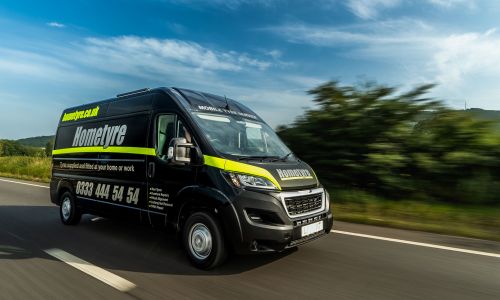
There are very few companies that will offer wheel alignment on your driveway. This is not because the process isn't possible. It is simply because the other companies have not invested in the equipment and the training of personnel to carry out the work.
At Hometyre, we recognise that you are using a mobile tyre service to both minimise disruption to your time and in many cases to avoid having to visit a garage or fast fit centre entirely. Having the ability to not just fit your tyres but make sure they don't wear out prematurely due to alignment errors is, in our opinion, the only way to offer a proper mobile tyre service!
Hometyre offer free no obligation wheel alignment checks whenever you buy tyres with us.
If you believe you may have an alignment issue, contact our support team today on 08007839310 or 03334445454 - or for out of hours enquiries please complete the QUICK ENQUIRY FORM below and we'll get straight back to you as soon as we can!








HometyreGroup
Join the conversation
on Twitter
Follow us